Shopify vs Custom Ecommerce Platform: What to Build for a Growing DTC Brand

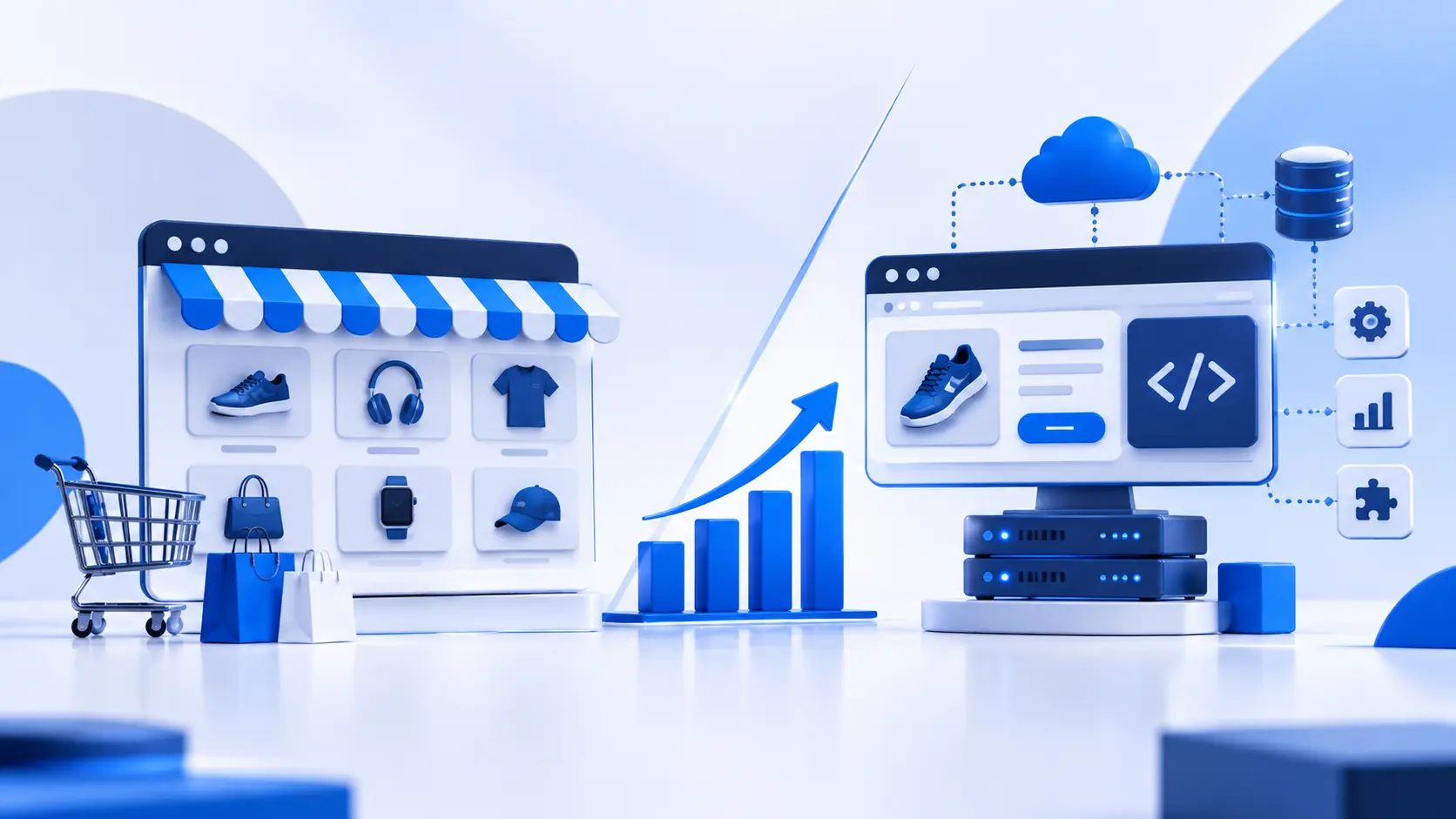
Shopify vs custom ecommerce platform is a question of trade-offs, not a single right answer. Here's where each path fits, where each one breaks down, and how a growing DTC brand can tell which fits.
Shopify vs custom ecommerce platform is usually not a question with one right answer; it's a question of which constraints a growing DTC brand can live with. Shopify handles hosting, checkout, payments, and a large app ecosystem out of the box, while a custom platform trades that convenience for more control over the buying experience and the data behind it.
The harder part of this decision tends to come later, once a brand has outgrown what a template-based storefront and app marketplace can comfortably support without stacking workarounds on top of each other.
What Shopify Actually Handles Out of the Box
As DTC ecommerce software goes, Shopify is a common starting point for many brands. It provides hosting, PCI-compliant checkout, payment processing through Shopify Payments or a connected gateway, and a storefront builder that can go live without custom backend work. Its app ecosystem covers much of what a typical DTC brand needs: email marketing integrations, reviews, upsells, and basic loyalty tools, each added as a plugin rather than built from scratch.
Where Shopify Fits Many DTC Brands Well
Launching quickly with a proven checkout
A brand getting its first storefront live generally benefits more from a tested, PCI-compliant checkout than from a custom one built from nothing, since checkout bugs cost sales directly.
Standard product catalogs and promotions
Straightforward product variants, standard discount codes, and typical promotional campaigns are largely what Shopify's themes and apps were built around.
Small teams without dedicated engineering
A brand without engineers on staff can often still run a fully functional store, since Shopify and its app ecosystem absorb most of the technical maintenance.
Where Custom Ecommerce Development Starts to Make Sense
Custom ecommerce development usually enters the conversation once a brand's workflows no longer fit cleanly into what Shopify's theme and app model was designed around.
Checkout or product logic Shopify's apps can't cleanly handle
Highly configurable products, complex bundling rules, or a checkout flow tied tightly to internal inventory or fulfillment logic can need code that sits closer to the product than an app marketplace comfortably supports.
App fees and platform dependency add up
A handful of paid apps covering subscriptions, loyalty, and personalization can add a meaningful recurring cost on top of Shopify's own plan fee, and each one adds a dependency the brand doesn't fully control.
The storefront itself becomes a competitive differentiator
A brand whose on-site experience, a configurator, personalization, or a distinctive checkout flow, is itself part of what sets it apart may find that a templated platform starts limiting the product, not just the backend.
Selling across multiple storefronts or channels at once
A brand selling direct, wholesale, and through several regional storefronts from one catalog can need inventory and pricing logic beyond what a standard Shopify setup handles comfortably, which is typically where a custom or hybrid approach gets evaluated more seriously.
A Hypothetical Example: A DTC Brand Outgrowing Shopify Plus
A hypothetical example: a DTC brand on Shopify Plus adds a product configurator, a subscription tier, and a loyalty program, each through a different app. The apps work individually, but keeping customer data, inventory, and order status consistent across all three starts requiring manual reconciliation. At that point, some brands build a thin custom layer that owns the product and customer logic while Shopify continues handling checkout and payment processing underneath, rather than migrating off the platform entirely.
Shopify vs Custom: The Actual Trade-Offs
Staying on Shopify trades some platform dependency for speed and lower maintenance; a similar trade-off plays out in white-label ordering for restaurants, where a business weighs marketplace convenience against owning the customer relationship directly. Building a custom platform trades that convenience for more control, which is the same calculation behind many subscription billing build vs buy decisions: the two paths rarely compete on cost at a single point in time, they compete on which constraints a specific product can live with.
Framed as one of several Shopify Plus alternatives, a custom build is rarely an all-or-nothing move; many brands keep Shopify underneath while building custom logic around it instead. Either way, the ecommerce platform build vs buy decision usually settles on which parts of the stack are worth owning directly. The payment processor underneath either path is its own separate decision; see Stripe vs Adyen for how that specific comparison plays out for US businesses.
Starting With What's Actually Limiting Growth
The clearest starting point is listing which specific workflows, not features in general, are already requiring workarounds on the current platform. Building out a custom product, checkout, or fulfillment layer is the same kind of work behind any enterprise software engineering project; it just happens to sit alongside an existing ecommerce platform rather than replacing it outright.
Frequently Asked Questions
Does moving off Shopify mean losing everything already built on it?
Not necessarily. Many brands keep Shopify for checkout and payment processing while building custom logic around product, subscriptions, or fulfillment on top of it, rather than replacing the whole platform at once.
Is Shopify Plus different enough to avoid needing a custom platform?
It depends on what's actually causing friction. Shopify Plus raises API limits and adds enterprise features, which solves some scaling problems, but it doesn't remove the underlying constraints of a templated platform for product or checkout logic that falls outside what its apps support.
How much does a custom ecommerce platform typically cost to build?
It varies widely with how much of the storefront, checkout, and backend logic is being replaced versus layered on top of Shopify, so there's no single reliable figure. A thin custom layer alongside Shopify is a meaningfully smaller scope than replacing the platform entirely.
Can a brand go back to Shopify after building a custom platform?
It's possible but rarely simple. Migrating product data, customer accounts, and order history back onto a template platform carries real risk of data loss or downtime, so many brands that switch plan for a careful, gradual move rather than a single cutover.
Is a headless commerce setup the same as building a fully custom platform?
No. A headless setup typically keeps Shopify's backend, inventory, and checkout while replacing the front-end storefront with custom code, which is a smaller change than replacing the backend logic itself. It's often a middle step between staying fully on Shopify and building a platform from scratch.
Does a small DTC brand need to think about this decision at all?
Not usually, early on. The decision tends to matter once specific workflows start requiring workarounds, which is more a function of product complexity and growth than company size alone.
Working Out Which Path Fits
The fastest way to tell is listing every workflow that currently needs a manual workaround or a stacked app and checking how many of them a custom layer would actually resolve. Enorness can be reached to talk through whether a specific set of workflows is better served by staying on Shopify, layering custom logic on top of it, or building a fully custom platform.

Written by
Mark Louis




Let's Build Something Extraordinary
Turn ideas into intelligent products that drive real business results.