Website vs Web App vs Mobile App: What's the Difference and Which One a Business Actually Needs

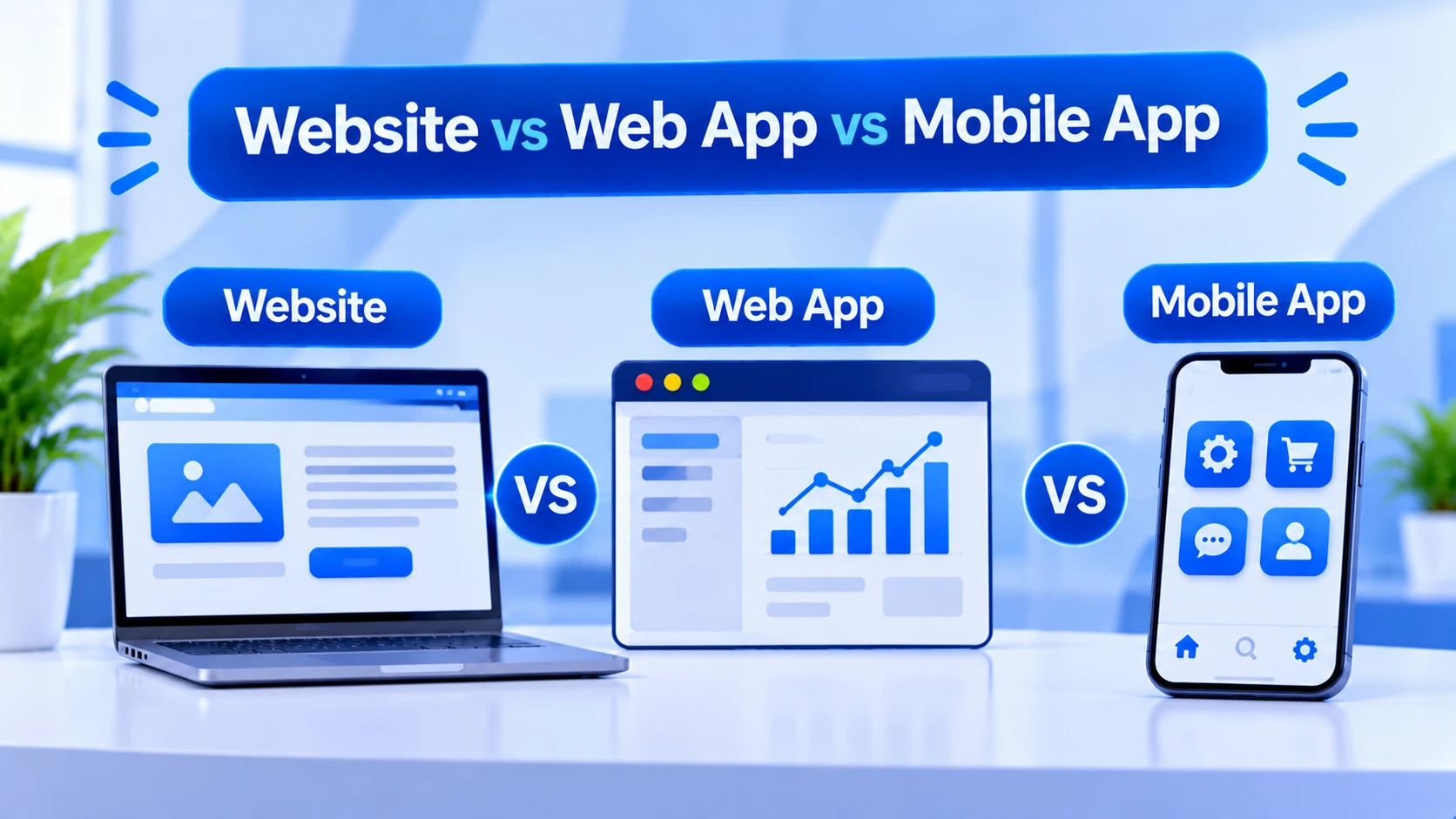
Website vs web app vs mobile app can sound like three names for the same thing, but each one solves a different problem. Here's a plain explanation of what separates them and how to tell which fits a specific need.
Website vs web app vs mobile app is a comparison that comes up early for many businesses deciding where to put a software budget, and the three terms get used loosely enough in everyday conversation that the actual differences often stay unclear. Each one is built for a different job, and picking the wrong one for a given need tends to show up later as a workaround, a missing feature, or a rebuild.
None of the three is automatically the better choice. A simple business can be well served by a website alone for years, while another business with a single core workflow might need a mobile app from the start. The useful question is what a specific business actually needs someone to be able to do, not which option sounds more advanced.
What a Website Actually Is
A website is mainly built to present information: who a business is, what it offers, and how to get in touch. Many pages are the same for every visitor, and the content changes when the business updates it, not based on anything the visitor does. A restaurant's menu page or a company's About page are typical examples.
What a Web App Actually Is
The answer to what is a web application comes down to behavior rather than appearance: a web app runs in a browser but lets a visitor log in, enter information, and get a personalized result back, more like software than a page of text. A project management tool or an online banking dashboard are both web apps, and the structure behind that kind of interactivity is covered in more detail in web application architecture.
What a Mobile App Actually Is
A mobile app is installed on a phone rather than opened through a browser, which lets it work offline, send push notifications, and use device features like a camera or GPS directly. Once a mobile app is the right call, the next decision is usually native vs cross-platform mobile app development, since that affects cost, timeline, and how the app performs on each platform. Enorness offers mobile app development for businesses that have decided a dedicated app is the right call.
Website vs Web App: Where the Line Actually Sits
The difference between website and web app is sometimes blurry in practice, since a site can include a small interactive piece, like a contact form or a quote calculator, without becoming a full web app. The clearer signal is whether a visitor is mostly reading content or mostly doing something that depends on their own data, like checking an order status or managing a subscription.
A useful test is picturing two different visitors on the same page at the same time. On a website, they generally see the same content. On a web app, each one is usually looking at their own account, their own data, or their own in-progress task, even though both opened the same address.
Web App vs Mobile App: Different Problems, Different Tools
Web app vs mobile app is less about which is better and more about where someone is when they need the tool. A web app reaches anyone with a browser and can be updated for all users at once, which suits occasional or desktop-based tasks. A mobile app fits daily, on-the-go use where speed, offline access, or a phone's own hardware actually matter to the task.
When to Build a Mobile App
When to build a mobile app usually comes down to how often someone would realistically open it. A workflow used a few times a month tends to work fine as a web app opened in a mobile browser, while one used daily, or one that depends on notifications pulling someone back in, tends to justify the added cost of a dedicated app.
A Hypothetical Example: A Growing Home Services Business
A hypothetical example: a home services business starts with a website listing its services and a phone number. As online bookings grow, customers start asking for a way to see appointment times and reschedule without calling in, which points toward a web app rather than more website pages. If technicians later need to check jobs and update status from the field without reliable internet, that specific need is what tends to justify adding a mobile app on top of the existing web app, rather than starting with one from day one.
Choosing Based on What the Business Actually Needs
Rather than starting from which option sounds most capable, it generally helps to start from the actual workflow a business is trying to support, then work out which format fits it. The same scoping question applies when deciding between custom and off-the-shelf software, whether the end result turns out to be a website, a web app, or a mobile app. Once a format is chosen, the build itself usually follows the phases covered in enterprise application development.
Frequently Asked Questions
Is a web app just a website with more features?
In a loose sense, yes, though the more useful distinction is that a website is mainly for reading information while a web app is built around letting someone do something, like managing an account or completing a task.
Does a business need a mobile app if it already has a web app?
Not always. A web app that works well in a mobile browser can cover many needs, and a dedicated mobile app tends to make more sense once a business wants offline access, push notifications, or deeper use of a phone's own hardware.
What is a web application, in simple terms?
A web application is software that runs in a browser but behaves more like a program than a page, letting a user log in, enter data, and get results back without reloading a new page for every action.
Is it cheaper to build a website than a web app?
Generally yes, since a website is usually simpler to design and build than software with logins, data handling, and interactive features, though the actual cost depends heavily on what each one is expected to do.
When should a business build a mobile app instead of a responsive website?
A mobile app tends to be worth it once a business depends on repeat daily use, device features like a camera or GPS, or working reliably without an internet connection, rather than an occasional visit.
Can a website, a web app, and a mobile app all exist for the same business?
Yes, and it's a common setup. A marketing website can handle discovery, a web app can handle account and billing tasks, and a mobile app can handle the parts of the experience people return to most often.
Working Out Which Format Fits
The clearest starting point is naming the specific task a business wants someone to complete, then checking that task against the three formats above rather than assuming one is the default. Enorness can be reached to talk through whether a specific need is better served by a website, a web app, or a mobile app, through enterprise software engineering scoped around the actual workflow.

Written by
Mark Louis




Let's Build Something Extraordinary
Turn ideas into intelligent products that drive real business results.