Peer-to-Peer Payment App Development: How to Build a Gifting App People Want to Use

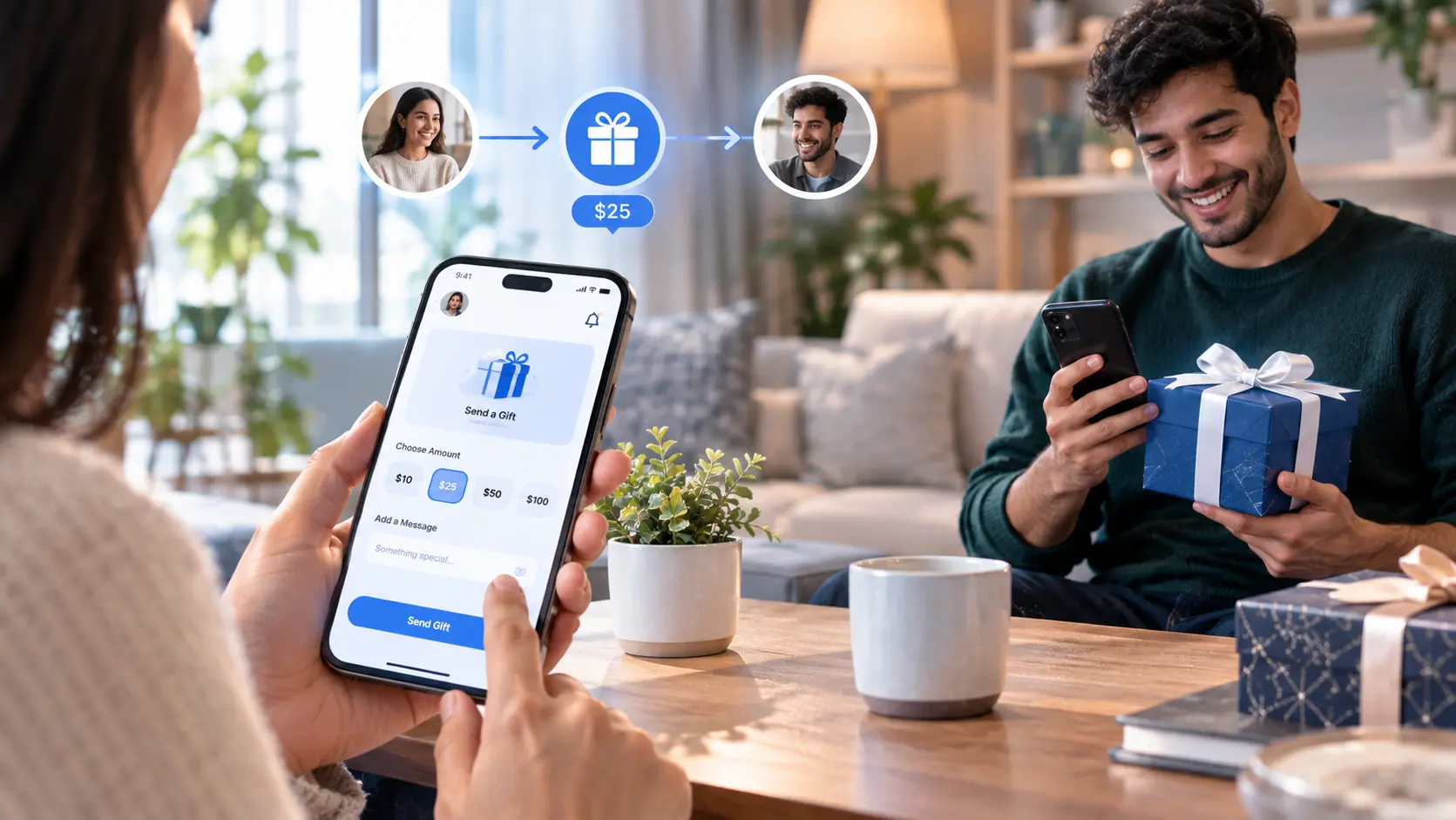
Learn how peer-to-peer payment app development powers modern gifting apps with seamless money transfers, personalized gifting experiences, secure payments, and features that encourage repeat use.
Here is a hypothetical example. A friend's wedding is two weeks away. The couple has a registry at one store, a honeymoon fund on a separate site, and a wish for a new espresso machine mentioned once at dinner. A guest opens a standard payment app, sends money with a heart emoji, and the transfer looks exactly like the one used to split last week's dinner bill.
Peer-to-peer payment app development has moved past simple transfers. The next wave of consumer fintech gives money context: the occasion, the person, and what they actually want.
Why Standard Money Transfers Fall Short for Gifting
Payment apps solved moving money between people, not the human side of giving. Three gaps stand out:
• Every transfer looks the same. A birthday gift and a rent payment appear identical in the transaction feed, with no way to attach occasion or intent.
• Wishlists live in silos. Each retailer keeps its own wishlist, disconnected from other stores and from the people who would buy from them.
• Giving stays guesswork. Without a shared, current list, a gift giver either asks directly or picks something and hopes it lands.
What a Digital Gifting App Actually Is
A digital gifting app is a consumer fintech product that lets people send money as a gift tied to a specific item, occasion, or cause. It sits between a payment app and a social commerce app, which is a shopping experience built around friends, recommendations, and shared lists rather than a single store.
Five Features That Make a Gifting App Work
1. Peer-to-Peer Sending With a Live Balance
Users send and receive gifts directly, with a live balance that shows what is available.
2. A Wishlist Builder That Works Across Stores
The wishlist is the heart of the product. Each item carries its price, tax, and tip, along with the store it came from and a link back to that store. A wishlist built this way works as a purchasing instruction, not a vague list of ideas. Strong wishlist app development also lets users add items from any store they name, rather than a closed catalog.
3. Referral Rewards
A referral rewards program gives users a reason to invite friends instead of using the app once for a single occasion. With automated referral rewards, credits are issued the moment an invitation converts, with no manual tracking.
4. Friend Finder
Gifting depends on a network. A friend finder helps users locate and connect with people already on the platform, so the first gift does not require convincing someone to sign up.
5. Full Transaction History
A clear record of gifts sent and received builds trust and helps users track occasions over time.
The Payment Engine Behind the Experience
Gifting features only work on top of a reliable payment engine. The standard approach is to build on an established payment processor rather than handle card data directly. Stripe payment integration is a common choice because it provides tested rails for moving money, plus tools for balances, payouts, and transaction records. A detailed Stripe vs Adyen comparison covers how the two widely used processors differ for US businesses.
Using a processor also keeps raw card numbers off the app's own servers, which reduces the compliance burden and the security risk. The app still owns everything around the payment: user flows, wishlist logic, and rewards. That combination is where custom fintech software earns its place, since off-the-shelf payment templates are built for bills and checkouts, not for gifts.
Fintech App Security and Compliance Basics
Money and personal data raise the stakes for every design decision. Fintech app security starts with four foundations:
• Strong authentication. Multi-factor login and biometric options protect accounts from takeover.
• Encryption everywhere. Data stays encrypted in storage and in transit between the app, the server, and the payment processor.
• Fraud monitoring. Unusual sending patterns, such as a sudden spike in transfers from a new account, trigger review before money moves.
• Least-privilege access. Internal staff and systems see only the data their role requires.
Moving money between people also raises regulatory questions, such as money transmission rules and identity verification requirements. These vary by state and country, so legal review belongs early in planning rather than after launch.
The infrastructure needs the same care. Hosting on secure cloud infrastructure with monitoring, backups, and access controls keeps the platform available during holiday peaks.
A Real Example From the Field
GetGFTD is a digital gifting platform that lets people send money as a gift rather than a plain transfer, tied to what the recipient actually wants. The problem it addresses is the one described earlier: traditional money transfers feel completely transactional, with no way to attach occasion or intent to the transaction itself. Enorness built the peer-to-peer gifting platform end to end as a mobile app.
The build integrates Stripe's payment rails to move money person to person securely, with a running balance, transaction history, and send-and-receive flows built specifically around gifting. Wishlist items carry price, tax, tip, and store attribution, and users add items from any store they name, with photos captured by camera, gallery, or emoji. The platform also supports custom charity portals for organized giving, plus a referral and rewards system.
The case study reports what was delivered rather than adoption figures, since adoption metrics were not part of that engagement's reporting scope. What shipped is a complete, working product: secure peer-to-peer transactions across mobile devices, wishlist creation with store attribution, and a referral system.
How to Plan a Peer-to-Peer Gifting App
Five steps keep the build focused.
1. Define the core occasion. Birthdays, weddings, holidays, and charity drives each shape the product differently.
2. Design the gifting loop. Map the full journey: create a wishlist, share it, receive a gift, and thank the giver.
3. Choose the payment processor early. The processor shapes balances, payouts, fees, and compliance work, so the decision belongs at the start.
4. Build security into the first sprint. Authentication, encryption, and fraud checks are part of the foundation, not features to add later.
5. Launch to a small community. A pilot group of friends, families, or one charity reveals friction in the gifting loop before a wider launch.
Metrics That Show Whether It Works
Four numbers give an honest view of a gifting app's health:
• Gifts per active user: How many gifts each user sends over a set period
• Wishlist completion rate: The share of wishlist items that receive a gift
• Referral conversion rate: The share of invitations that turn into active users
• Repeat giving rate: How many users send a second gift after their first
Tracking these in one gifting analytics dashboard shows which occasions, features, and rewards keep people coming back.
Common Mistakes to Avoid
• Copying a generic payment app. Without occasion, wishlists, and social context, a gifting app is just another transfer tool.
• Locking wishlists to a closed catalog. Users want items from the stores they already shop, not a limited list.
• Treating rewards as an afterthought. A referral system designed at launch grows the network that gifting depends on.
• Leaving compliance to the end. Payment and identity requirements shape the architecture, so late fixes cost far more.
How Enorness Builds Peer-to-Peer Payment Apps
Enorness is an AI-native software and digital product partner based in Sheridan, Wyoming. Every fintech project starts by mapping the user journey and the money flow together, then diagnosing where security, compliance, and experience requirements meet.
The team builds the payment engine and the consumer product as one system, verifies security and payment flows before launch, and refines the product as real users start giving. For any brand ready to make digital gifting feel personal, the next step is simple: Book a strategy call.
Frequently Asked Questions
Q1: What is peer-to-peer payment app development?
A: Peer-to-peer payment app development is the process of building a mobile app that lets people send and receive money directly with each other, including the payment engine, security controls, and user features around each transfer.
Q2: How is a digital gifting app different from a payment app?
A: A payment app moves money. A digital gifting app ties that money to an occasion, a wishlist item, or a cause, so the transfer carries meaning instead of looking like a bill payment.
Q3: Why do gifting apps use a payment processor like Stripe?
A: A processor provides tested rails for moving money and keeps raw card numbers off the app's own servers, which reduces security risk and compliance work.
Q4: What features should a gifting app launch with?
A: A strong first release includes peer-to-peer sending with a live balance, a wishlist builder with store links, transaction history, and a referral rewards program.
Q5: Do peer-to-peer payment apps need special compliance?
A: Moving money between people raises questions such as money transmission rules and identity verification, which vary by location. Legal review early in planning clarifies which obligations apply.
Q6: How do referral rewards help a gifting app grow?
A: Gifting depends on a network of friends and family. Rewards for successful invitations give users a reason to bring others onto the platform instead of using it once.
Final Thoughts
A well-built gifting app turns money into a personal gift by attaching occasion, intent, and a real wishlist to every transfer. Starting with one occasion, a secure payment engine, and a complete gifting loop is the most reliable way to prove the product before expanding to new use cases.

Written by
Mark Louis




Let's Build Something Extraordinary
Turn ideas into intelligent products that drive real business results.