Patient Adherence App Development: How Home Therapy Apps Keep Patients on Track Between Visits

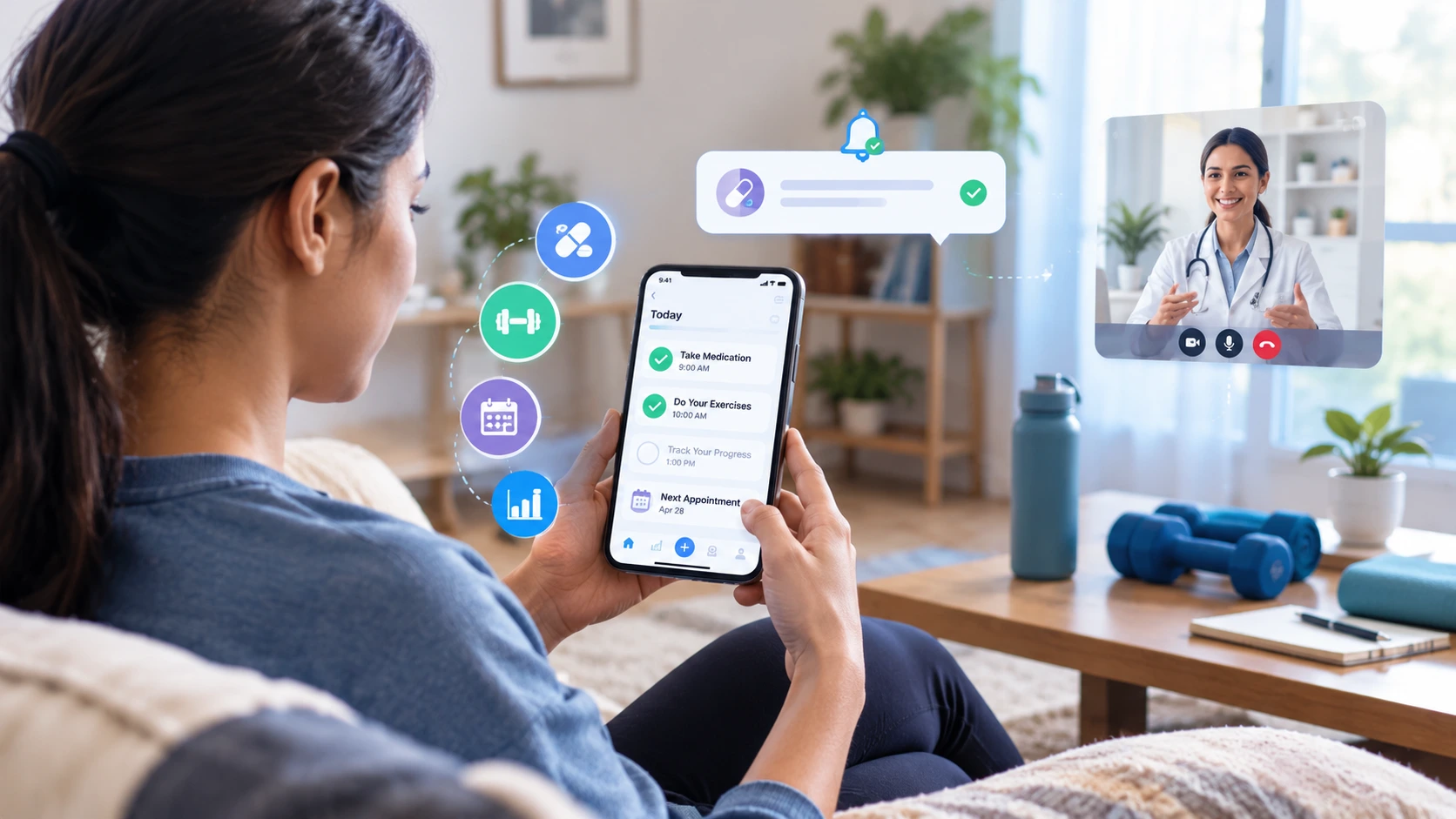
Learn how patient adherence apps help people stay on track with home therapy through reminders, progress tracking, personalized guidance, and better communication between visits.
Here is a hypothetical example. A patient leaves an orthodontic appointment with a printed sheet of daily tongue and jaw exercises. The first week goes well. By week three, the sheet is buried in a drawer, the routine has slipped to twice a week, and nobody at the clinic knows until the next visit, six weeks later.
A patient adherence app closes that gap. It turns a clinical plan into a guided daily routine, shows patients their own progress, and gives clinicians a view of what happens at home instead of a guess.
Why Adherence Breaks Down Between Visits
Treatment adherence means how closely a patient follows the plan a clinician prescribes, from medication schedules to daily exercises. It has been a known weak point in healthcare for decades. The World Health Organization's landmark 2003 report on long-term therapies estimated that adherence to long-term therapy for chronic illnesses averages about 50% in developed countries.
Home therapy programs face three specific problems:
• Instructions fade. A printed sheet or verbal explanation is clear in the clinic and vague at home a week later.
• Progress is invisible. Patients have no simple way to see whether they are keeping up or improving.
• Clinicians lose sight. Without shared data, the first real signal of whether therapy is working arrives at the next appointment.
What a Patient Adherence App Does
A patient adherence app is a mobile application that guides patients through a prescribed treatment plan at home and records whether they complete it. The best versions serve two audiences at once. Patients get structure and motivation. Clinicians get visibility and earlier warning signs.
The category covers physical therapy, orthodontic and myofunctional therapy, speech therapy, cardiac rehab, and chronic condition programs. The common thread is a treatment that depends on daily consistency rather than a single procedure.
Five Features That Make Home Therapy Apps Work
1. A Clear View of the Diagnosis and Plan
Patients follow a plan more closely when they understand it. A dedicated screen that shows the diagnosis and treatment plan in plain language keeps the purpose of each exercise visible.
2. Guided, Step-by-Step Exercises
A home exercise program app breaks each session into short steps with images, video, or timers. Patients see exactly what to do and in what order, which removes the guesswork of a printed sheet.
3. Weekly Progress Tracking
A progress view shows completion over time, so patients see at a glance whether they are on track.
4. Rewards That Reinforce Consistency
Gamification in healthcare apps means using game elements, such as points, badges, and streaks, to encourage healthy habits. In an adherence app, rewards tied to completed sessions give patients a reason to return the next day.
5. Reminders at the Right Moment
Timed notifications prompt patients when a session is due. Automated patient reminders work best when patients choose their own reminder times, so prompts fit into real routines instead of interrupting them.
What Clinicians Need From the Same App
An app built only for patients solves half the problem. Clinicians need a simple way to see who is on track and who is falling behind. A patient progress dashboard, a single screen that summarizes completion rates and trends across a caseload, lets a care team spot a struggling patient weeks before the next visit.
That early signal is the real clinical value. A patient who skipped half of last week's sessions needs a check-in call now, not a surprised conversation at the next appointment.
A Real Example From the Field
Enorness built My Mouth Works, a mobile healthcare app for guided orthodontic and oral therapy at home. Before the app, orthodontic patients had no structured home therapy system and no way to confirm they were doing the exercises correctly. Clinicians only learned whether therapy was working at the next in-person visit.
The remote orthodontic therapy app turns a clinical diagnosis into a step-by-step exercise program. The live app includes five features: My Diagnosis, Start Exercises, Weekly Progress, My Rewards, and Social Sharing, which lets patients post progress milestones to Facebook.
The case study reports what was delivered rather than usage figures, since adoption and clinical outcome data were not part of that engagement's reporting scope. The value lies in the structure itself: a therapy plan that a patient and a clinician can both see, instead of guesswork and a wait until the next appointment.
Privacy and Compliance Come First
Health apps handle some of the most sensitive data a business can hold. In the United States, a clinic or health plan that collects protected health information through an app, along with any vendor that handles that data on its behalf, must meet HIPAA requirements. In practice, those requirements typically include encryption, access controls, audit logs, and a signed business associate agreement with each vendor that processes the data. The full checklist is covered in the guide on HIPAA compliant software development.
Two design choices deserve special attention in adherence apps:
• Social sharing must stay optional. Any feature that posts progress outside the app should be off by default and fully controlled by the patient.
• Reminders must stay discreet. Notification text on a lock screen should never reveal a diagnosis or treatment detail.
How to Build a Patient Adherence App
A phased build keeps the scope focused and the budget predictable.
1. Map the clinical workflow. Document how clinicians prescribe the plan today, what patients receive, and where follow-up breaks down.
2. Define the core loop. The first release covers one complete cycle: view the plan, complete a session, see progress, earn a reward.
3. Design for real patients. Large tap targets, plain language, and short sessions matter more than visual polish, especially for children and older adults.
4. Build security in from the start. Encryption, secure login, and role-based access belong in the first sprint, not the last one.
5. Pilot with a small group. Launch with one clinic or one patient cohort, gather feedback, and fix friction points before a wider rollout.
6. Add the clinician view. Once patients use the app consistently, add the dashboard and alerts that turn their data into clinical action.
Experienced teams in remote therapy app development build on a single cross-platform codebase for iOS and Android, which keeps the first release within reach for smaller practices.
Metrics That Show Whether It Works
Four numbers give an honest picture of an adherence app's performance:
• Session completion rate: The share of prescribed sessions patients actually finish
• Weekly active patients: How many patients open the app and complete at least one session each week
• Streak length: How many consecutive days patients maintain their routine
• Early intervention count: How many at-risk patients the care team contacts before their next visit
Common Mistakes to Avoid
• Copying the paper handout into an app. A digital PDF does not change behavior. Guided steps and visible progress do.
• Overloading the first release. Chat, video calls, and community features can wait until the core loop works.
• Ignoring the clinician side. Patient data that nobody reviews creates no clinical value.
• Treating compliance as a final step. Retrofitting security after launch costs far more than building it in.
How Enorness Builds Patient Adherence Apps
Enorness is an AI-native software and digital product partner based in Sheridan, Wyoming. Every healthcare app project starts by mapping the clinical workflow and diagnosing where patients and care teams lose track between visits.
The team then builds the patient app and clinician tools around that workflow, verifies security and usability with real users before launch, and refines the product as adoption grows. For any clinic or telehealth provider ready to give patients structure between appointments, the next step is simple: Book a strategy call.
Frequently Asked Questions
Q1: What is a patient adherence app?
A: A patient adherence app is a mobile application that guides patients through a prescribed treatment plan at home, tracks whether they complete it, and gives clinicians visibility into their progress between visits.
Q2: Which treatments benefit most from an adherence app?
A: Treatments that depend on daily consistency benefit most, including physical therapy, orthodontic and myofunctional therapy, speech therapy, cardiac rehab, and chronic condition programs.
Q3: Does a patient adherence app need to be HIPAA compliant?
A: In the United States, an app that collects protected health information for a clinic, health plan, or their vendors must meet HIPAA requirements, which in practice include encryption, access controls, audit logs, and business associate agreements.
Q4: How does gamification improve treatment adherence?
A: Gamification adds points, badges, and streaks tied to completed sessions. These rewards give patients a visible reason to return each day and make consistency feel like progress.
Q5: Should an adherence app include social sharing?
A: Social sharing can add accountability, but it should be optional, off by default, and fully controlled by the patient, with no health details shared without clear consent.
Q6: What should the first version of an adherence app include?
A: The first version should cover one complete loop: viewing the treatment plan, completing guided sessions, tracking weekly progress, and earning rewards, with security built in from the start.
Final Thoughts
Most treatment plans succeed or fail at home, far from the clinic. A well-built patient adherence app gives patients structure, shows them their progress, and gives care teams an early warning when someone starts to slip. Starting with one therapy program and one complete patient loop is the most reliable way to prove the value before expanding.

Written by
Mark Louis



Let's Build Something Extraordinary
Turn ideas into intelligent products that drive real business results.