Fan Engagement App Development: How Teams and Venues Keep Fans Coming Back

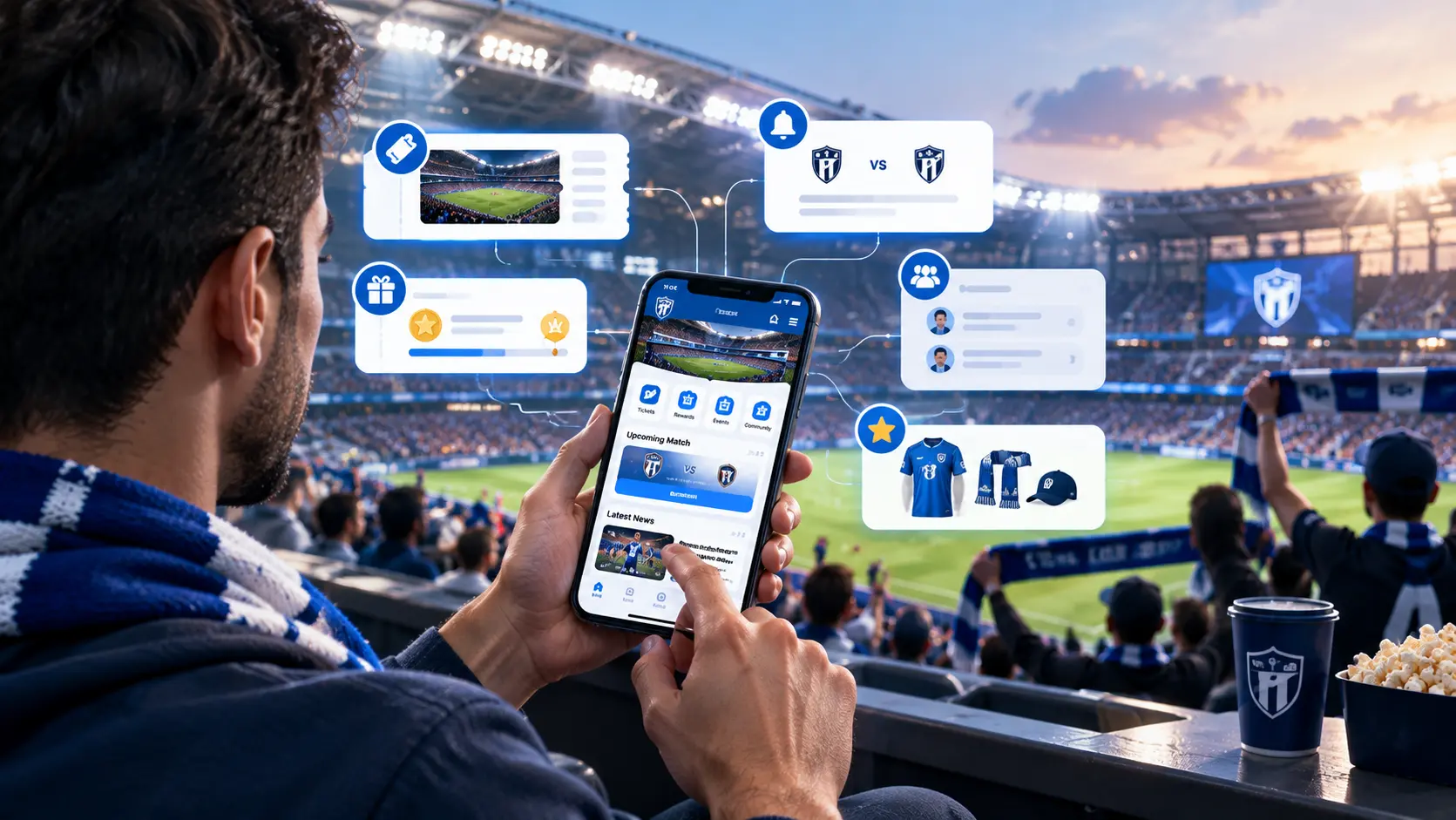
Discover how fan engagement apps help sports teams and venues build loyalty, personalize fan experiences, increase event participation, and encourage repeat visits through mobile technology.
Here is a hypothetical example. A racing team spends months preparing for a race weekend. Fans download the official app, check the schedule once, and never open it again. Afterward, a sponsor asks what its trackside activation delivered, and the team has only a headcount.
Fan engagement app development solves that problem by turning a static schedule app into a live experience that responds to where fans are, what they do, and what they care about.
Why Most Event Apps Get Deleted
Most event apps are digital brochures that list times and maps, then go quiet. Four problems keep them from earning a place on a fan's home screen:
• Nothing changes during the event. The app shows the same screens whether a fan is in the parking lot or at the finish line.
• Every fan gets the same message. Generic push notifications reach thousands of people at once and quickly become noise.
• Organizers see little. Without location data, there is no clear picture of how people move through the venue or which zones draw crowds.
• Updates wait on app stores. Changing a campaign or banner means a new release and a review cycle, so content falls behind the event itself.
What a Fan Engagement Platform Actually Does
A fan engagement platform is software that connects fans, organizers, and sponsors through one branded app and an admin system behind it. Fans get timely content, rewards, and offers. Organizers get campaign control and venue visibility. Sponsors get proof of engagement.
Six Features That Drive Fan Engagement
1. Geofencing for Venue Arrival
Geofencing for events uses a virtual boundary drawn around a real location, such as a stadium, parking area, or fan zone. It typically uses GPS, sometimes supported by Wi-Fi and cell signals, to detect the phone's position. When a fan's phone crosses that boundary, the app triggers a welcome message, a parking tip, or a check-in reward.
2. BLE Beacons for Indoor Precision
GPS struggles inside concrete stands and covered concourses. Bluetooth Low Energy (BLE) beacons, small wireless transmitters placed around a venue, fill that gap. BLE beacon proximity marketing detects when a fan is near a specific booth or checkpoint and responds in that exact spot.
3. A Rules Engine Behind Every Interaction
A rules engine is the logic layer that decides what happens after a trigger. Entering a geofence might award points, a QR scan might unlock exclusive content, and a beacon detection might surface a sponsor offer or alert staff. With automated fan rewards configured through an admin dashboard, organizers change these rules without writing code.
4. Loyalty Points and Rewards
Points for attending, checking in, and visiting sponsor zones give fans a reason to open the app throughout the day and across the season. Rewards work best when they are tied to real experiences rather than generic points programs that offer little beyond a discount.
5. Content Updates Without App Releases
A content management system, or CMS, lets administrators publish news, event information, sponsor campaigns, and banners instantly.
6. Sponsor Activation Tracking
A sponsor activation app records verified interactions, such as beacon visits to a sponsor zone, views of sponsor content, and redeemed offers. Those records give sponsors evidence of reach at renewal time, instead of an estimate based on attendance.
What Sponsors Need to See
Renewal conversations depend on proof. Three data points make the case:
• Visits: How many fans entered the sponsor zone, based on beacon or geofence data
• Engagement: How many fans opened the sponsor's content or offer
• Redemption: How many fans claimed a reward or discount
Bringing this data into one fan engagement analytics view, a dashboard that shows activity by zone, time, and campaign, gives organizers a clear story for every sponsor meeting.
A Real Example From the Field
Spark Compass is a white-label fan engagement platform built by Enorness for sports teams, racing organizations, stadiums, and event organizers. It has been deployed for SparkSea and Rahal Letterman Lanigan Racing.
Before Spark Compass, event apps offered little beyond a schedule, every attendee received the same generic notifications, and organizers had little visibility into how people moved through the venue. Campaign changes also had to wait for app store release cycles.
The platform combines geofencing and BLE beacons, with user permission, to detect venue entry, sponsor zone proximity, and checkpoints. A rules engine turns those triggers into loyalty points, unlocked content, offers, or staff alerts, and a CMS lets administrators update content without an app release. Because the system is white-label and multi-tenant, each organization launches its own branded app on shared architecture instead of commissioning a separate build.
The case study does not report usage figures, since adoption data from those deployments was not captured for it. The shift it documents is structural: targeted messages instead of generic blasts, campaigns that update without app releases, and visibility into venue activity that organizers did not have before.
Privacy and Permissions Come First
Location features depend on trust. Both iOS and Android require apps to ask permission before accessing location or Bluetooth, and fans can decline. A well-designed fan app explains why it asks and what fans get in return. Privacy laws vary by state and country, so a legal review of data practices belongs on the launch checklist.
Three practices keep location features aligned with fan expectations:
• Ask in context. Request location access when a fan first uses a location feature, not on the first launch screen.
• Collect only what the experience needs. Zone-level presence answers most sponsor and venue questions without storing a detailed movement history.
• Give fans control. A clear settings screen lets fans turn location features and marketing messages on or off at any time.
How to Plan a Fan Engagement App Build
Five steps keep the project focused.
1. Start with the fan journey. Map a full event day from arrival to exit, and mark the moments where the app adds value.
2. Choose the first triggers. Pick a handful of geofences, beacons, and QR codes tied to clear rewards, rather than covering the whole venue at once.
3. Build the admin side early. Organizers need to manage rules, content, and campaigns themselves from day one.
4. Plan for event-day traffic. Thousands of fans open the app at the same moments, such as gates opening or a race start, so the backend needs scalable event-day infrastructure that absorbs sudden spikes.
5. Pilot at one event. Test beacon placement, notification timing, and reward redemption at a single event, then expand across the season.
Experienced teams in stadium app development build on a cross-platform codebase, so iOS and Android fans get the same experience from the first release.
Common Mistakes to Avoid
• Sending too many notifications. Fans who feel spammed turn notifications off, which removes the most valuable channel.
• Placing beacons without testing. Signal strength changes with crowds, walls, and metal structures, so every placement needs an on-site test.
• Treating the app as a one-event project. A platform that carries points and content across the season builds loyalty, while a one-off app is forgotten.
• Leaving sponsors without reporting. Unpackaged sponsor data adds nothing at renewal time.
How Enorness Builds Fan Engagement Platforms
Enorness is an AI-native software and digital product partner based in Sheridan, Wyoming. Every fan engagement project starts by mapping the event-day journey and diagnosing where fans, organizers, and sponsors lose value today.
The team then builds the fan app, admin tools, and location triggers around that journey, verifies beacon and geofence behavior on site before launch, and refines rules and content as each season runs. For any team, venue, or event organizer ready to give fans a reason to keep the app open, the next step is simple: Book a strategy call.
Frequently Asked Questions
Q1: What is fan engagement app development?
A: Fan engagement app development is the process of building a branded mobile app and admin platform that delivers personalized content, rewards, and sponsor offers to fans based on where they are and what they do at an event.
Q2: What is the difference between geofencing and BLE beacons?
A: Geofencing typically uses GPS to detect when a phone enters a defined area, such as a stadium or parking lot. BLE beacons use short-range Bluetooth signals to detect proximity to a specific spot, which works better indoors where GPS is weak.
Q3: How do fan engagement apps help sponsors?
A: They record verified interactions, such as visits to a sponsor zone, content views, and redeemed offers, so sponsors receive evidence of engagement instead of estimates.
Q4: What is a white-label fan engagement platform?
A: A white-label fan engagement platform is a shared system that each organization brands as its own, with custom design, navigation, and rewards, without building a separate app from scratch.
Q5: Do fans have to share their location?
A: No. Both iOS and Android require apps to ask permission for location and Bluetooth access, and fans can decline. A well-built fan app still works without location, with fewer personalized features.
Q6: Can content be updated during a live event?
A: Yes. With a built-in content management system, administrators publish news, banners, and sponsor campaigns instantly, without waiting for an app store release.
Final Thoughts
Fans already carry a smartphone into every venue. A fan engagement app turns that phone into a reason to return, gives organizers real visibility into event-day activity, and gives sponsors proof of value. Starting with one event, a handful of well-placed triggers, and a clear reward is the most reliable way to prove the platform before rolling it out across a full season.

Written by
Mark Louis


Let's Build Something Extraordinary
Turn ideas into intelligent products that drive real business results.