Mobile Loyalty Apps: Why Generic Points Programs Are Quietly Failing

Ninety percent of loyalty programs deliver a positive ROI on paper.
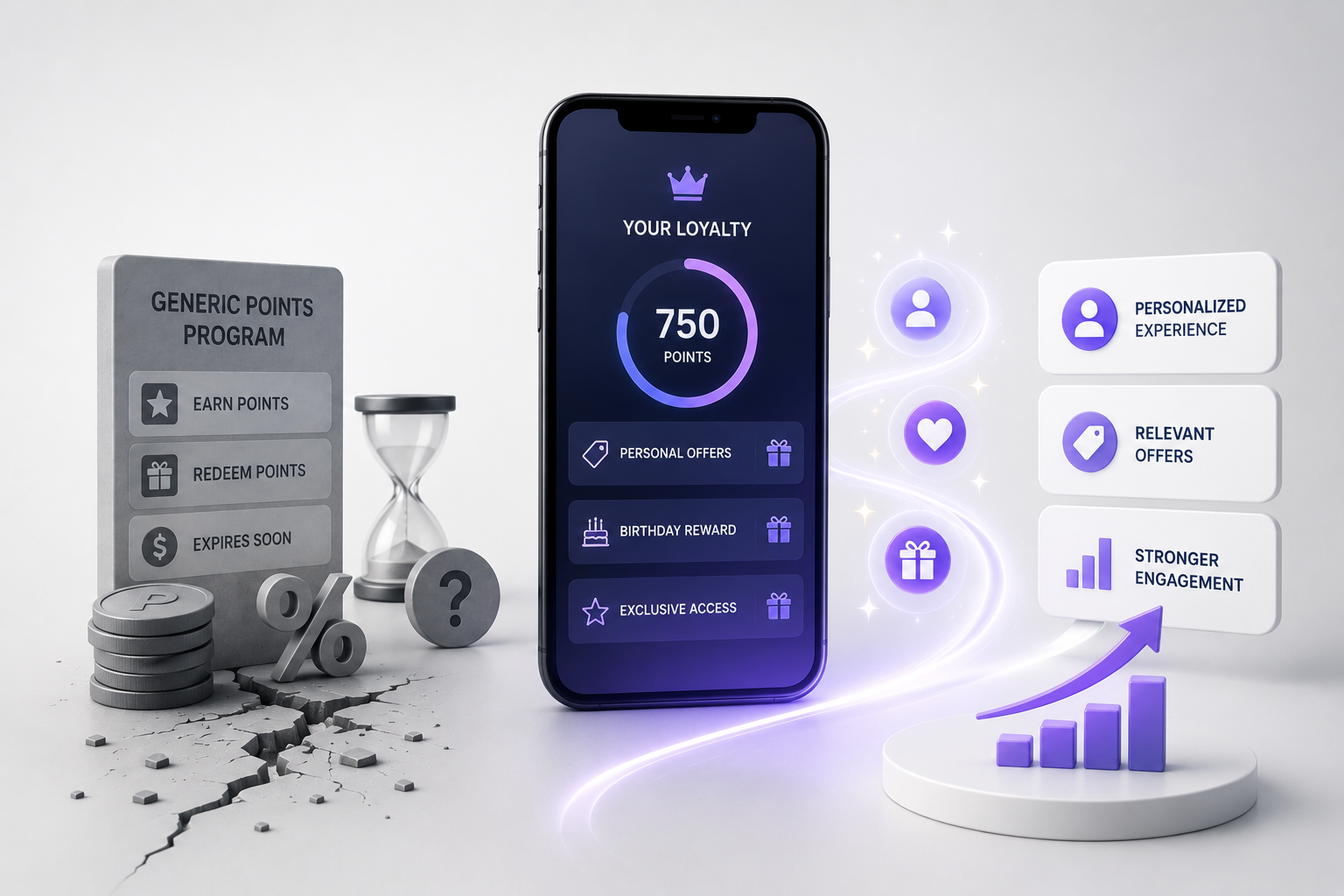
Ninety percent of loyalty programs deliver a positive ROI on paper. Almost none of them get the engagement that number implies. Most customers sign up, collect a few points on autopilot, and never open the app again which means the ROI is coming from a small, already-loyal minority while the program itself does very little for everyone else.
That gap between "technically profitable" and "actually working" is where most loyalty strategy conversations go wrong. The fix isn't a better rewards tier. It's rethinking what the app is actually asking a customer to do.
The Punch-Card Problem Didn't Go Away - It Just Got a UI
A points-per-dollar loyalty program, whether it lives on a physical card or inside an app, asks the customer to do something passive: keep buying, and eventually get something back. There's no reason to check in, no reason to open the app between purchases, and no emotional pull beyond "I get a discount eventually."
The loyalty loyalty apps actually driving repeat behavior work differently. Starbucks app users visit stores over five times more often than non-app customers. Nike's app shoppers spend roughly three times more than guest checkouts. That gap isn't about the rewards being bigger, it's about the app giving customers a reason to open it that has nothing to do with redeeming points.
Two Mechanics That Actually Move the Needle
Mobile-native, not mobile-adapted.
A loyalty program built for mobile from the start can use push notifications, location awareness, and real-time point tracking in ways a responsive website never can. The difference matters because of how people actually use their phones checking an app briefly and frequently, the way they check messages, not the way they visit a website once a month. A loyalty experience squeezed into that same rhythm gets far more touchpoints than one that only exists at checkout.
We built exactly this kind of mobile-native experience for a retail loyalty program giving customers real-time point tracking and reward redemption inside an app designed around how people actually use their phones day to day, not a webpage repackaged for a smaller screen.
Gifting that feels chosen, not defaulted.
Traditional gifting cash, generic gift cards is functional but forgettable. It carries no signal that the sender thought about the recipient specifically. Gifting mechanics built around curation, wishlists, and peer-to-peer sending flip that: the gift feels selected rather than defaulted to, which creates a stronger emotional association with the brand that made it possible.
We took this approach with a peer-to-peer gifting platform, turning what's usually a purely transactional action sending money into something closer to sending a genuinely considered gift, complete with wishlist functionality and reward layers most cash-transfer tools skip entirely.
Why Personalization Beats Points Every Time
Both mechanics mobile-native loyalty and personalized gifting solve the same underlying problem from different directions: generic, one-size-fits-all retention tools don't hold attention. A loyalty app that feels like digital homework gets deleted within a week. A gifting flow that feels like a bank transfer gets used exactly once and forgotten.
The technology has to be designed around how people actually want to engage quickly, on mobile, with something that feels tailored to them specifically not around whichever mechanic was fastest to build. That's the difference between a program with a positive ROI on paper and one customers genuinely use.
The Diagnostic Question
For any business evaluating its current loyalty or gifting technology, the useful question isn't "what features does it have." It's "does anyone open this more than once." If a program is technically live but functionally ignored, the fix usually isn't a bigger discount, it's rebuilding the mechanic around genuine engagement instead of passive point accumulation.
See our mobile loyalty app peer-to-peer gifting platform
Frequently Asked Questions
Why do most loyalty apps get abandoned after the first few uses?
Most loyalty apps only give customers a reason to open them at the point of redemption, which is infrequent. Apps that use push notifications, real-time point updates, and mobile-native design give customers reasons to check in between purchases, which is what actually builds habitual usage.
Is a custom-built loyalty app worth it compared to a SaaS loyalty platform?
It depends on how differentiated the loyalty mechanic needs to be. Off-the-shelf platforms work well for standard points-based programs, but businesses wanting a genuinely distinct engagement mechanic like personalized gifting or tiered mobile-native experiences usually outgrow template platforms quickly.
How does peer-to-peer gifting technology differ from a standard gift card system?
Standard gift cards are a fixed monetary value with no personalization. Peer-to-peer gifting platforms typically add wishlist functionality, curated options, and a social layer that makes the gift feel selected for the recipient rather than a generic monetary placeholder.
What's a realistic engagement benchmark for a mobile loyalty app?
Benchmarks vary by industry, but the useful comparison isn't an industry average, it's whether app opens correlate with repeat purchases at all. A program with high sign-ups but low repeat app opens is usually a sign the mechanic needs to change, not the reward size.
Does adding gamification always improve loyalty app retention?
Gamification helps when it adds genuine variety to the experience tiers, surprise rewards, progress mechanics, but it backfires when it's layered onto an otherwise passive points system as decoration. The underlying mechanic still needs to give customers a reason to engage, not just a reason to look.

Written by
Admin

Let's Build Something Extraordinary
Turn ideas into intelligent products that drive real business results.