Choosing the right tech stack for mobile app development is one of the most critical decisions for businesses operating in the U.S. market. With high user expectations, strict data privacy regulations, and intense competition, the technology behind your mobile app directly impacts performance, scalability, security, and long-term ROI. A well-chosen tech stack not only accelerates development but also ensures your app can adapt to evolving business and user demands.
This guide explains how to select the right mobile app tech stack for the U.S. market, based on real-world development practices, industry standards, and proven decision-making frameworks.
Before evaluating options, it’s important to understand what “tech stack” actually means in the context of mobile app development.
A mobile app tech stack typically consists of:
Each layer must work cohesively to deliver a reliable, high-performing application suitable for U.S. users and business environments.
Choosing a tech stack is not about trends it’s about alignment with business goals, regulatory requirements, and market expectations.
Before discussing programming languages or frameworks, businesses must define what the app is meant to achieve.
In practical development workflows, teams start by answering:
For example, a U.S.-based fintech app prioritizes security and compliance, while a food delivery app focuses on performance and real-time updates. The tech stack must reflect these priorities to avoid costly rework later.
Platform selection significantly impacts the technology choice.
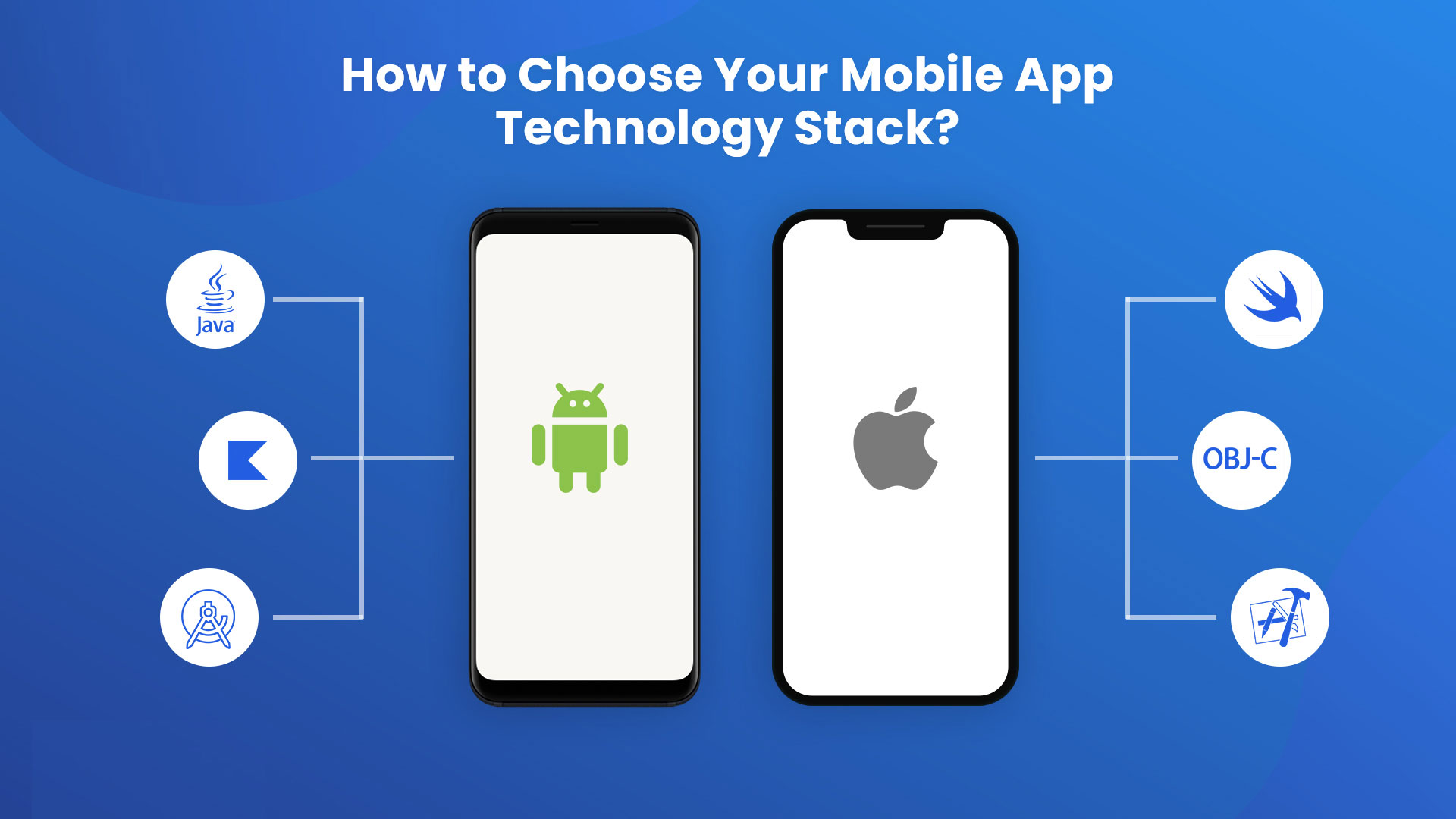
In the U.S., iOS has a strong market share, especially among higher-income and enterprise users, while Android dominates volume-based consumer markets. This leads to three common approaches:
From experience, native development offers the best performance and platform-specific control, while cross-platform frameworks reduce development time and cost. The right choice depends on user expectations, budget, and long-term roadmap.
Budget plays a decisive role in tech stack decisions.
For startups and mid-sized businesses in the U.S., faster MVP launches often outweigh long-term architectural perfection. Cross-platform frameworks allow teams to:
However, enterprise-grade applications often justify higher initial investment in native or hybrid architectures to support long-term scalability, compliance, and performance.
The front-end defines the user experience, responsiveness, and visual consistency of your mobile app.
Native’s development is often preferred for apps that require high performance and deep platform integration.
Native tech stacks offer:
In regulated U.S. industries like healthcare and finance, native apps are often chosen due to their stability and security controls.
Cross-platform development has matured significantly and is widely adopted in the U.S.
Popular frameworks include:
These frameworks allow teams to build apps for both iOS and Android using a single codebase. In real-world projects, businesses choose cross-platform stacks when:
However, teams must evaluate long-term maintainability and ensure access to skilled developers in the U.S. job market.
The backend powers data handling, authentication, business logic, and integrations—making it a cornerstone of the tech stack.
Common backend technologies used in U.S.-based mobile apps include:
The right choice depends on:
For example, Node.js is often selected for real-time applications like chat or delivery tracking, while Java and .NET dominate enterprise and regulated environments.
Database choice impacts performance, scalability, and data integrity.
Common options include:
U.S. businesses handling large datasets or real-time analytics often use a combination of databases. Hybrid database architectures are common in scalable mobile applications.
Most U.S.-based mobile apps rely on cloud infrastructure to support scalability and reliability.
Cloud Providers Commonly Used in the USA
Leading cloud platforms include:
These platforms offer:
Choosing a cloud provider often depends on existing enterprise agreements, compliance needs, and regional availability.
In the U.S., apps may need to comply with:
The tech stack must support encryption, audit logging, and secure access control. Cloud services and backend frameworks should align with these requirements from the start.
Security is not an add-on it’s a foundational requirement in the U.S. market.
A robust tech stack includes:
From experience, security issues often arise when teams rush MVP’s without embedding security into the architecture. Retrofitting security later is costly and risky.
A tech stack is only as good as the team maintaining it.
Hiring and Long-Term Maintenance
When choosing a tech stack, businesses should consider:
Technologies like React Native, Swift, Kotlin, Node.js, and Python have strong ecosystems and large talent pools, reducing hiring risk and maintenance costs.
A common mistake is choosing a tech stack solely for current needs.
Planning for Scale
The U.S. market often demands rapid scaling once product-market fit is achieved. A scalable tech stack should:
Micro services, containerisation, and cloud-native architectures are increasingly common in scalable mobile app solutions.
Based on real-world projects, businesses often encounter the same pitfalls:
Avoiding these mistakes requires aligning technical decisions with business strategy and market realities.
To make informed decisions:
Successful U.S.-based apps are built on stable, well-supported tech stacks rather than experimental combinations.
Choosing the right tech stack for mobile app development in the USA is a strategic decision that affects development speed, operational costs, user experience, and long-term success. There is no universal “best” stack only the one that best aligns with your business goals, compliance needs, and growth plans.
By focusing on real-world requirements, proven technologies, and future scalability, businesses can build mobile apps that compete effectively in the demanding U.S. market while remaining adaptable to future innovation.
1. Is a cross-platform tech stack reliable for enterprise mobile apps in the USA?
Yes, cross-platform frameworks like React Native and Flutter are reliable for many enterprise use cases, especially when performance requirements are moderate and scalability is planned properly. However, apps requiring deep hardware integration or maximum performance may still benefit from native development.
2. How does U.S. data privacy regulation impact tech stack selection?
U.S. data privacy and industry regulations influence backend, cloud, and security choices. The tech stack must support encryption, secure authentication, audit logging, and compliance standards such as HIPAA or PCI-DSS where applicable.
3. Should startups in the USA choose speed or scalability when selecting a tech stack?
Startups should prioritize speed-to-market initially while ensuring the chosen stack can scale. Using proven frameworks and cloud-native services allows startups to launch quickly without blocking future growth.
4. Does tech stack choice affect app maintenance and long-term costs?
Yes, the tech stack directly impacts maintenance costs. Well-supported technologies with large developer communities reduce bug-fixing time, hiring challenges, and upgrade risks over the app’s lifecycle.
5. How often should a mobile app tech stack be reviewed or updated?
A tech stack should be reviewed periodically typically every 12 to 18 months to ensure it aligns with performance needs, security standards, and evolving business requirements, without unnecessary rewrites.




Tell us about your project and we will handle the rest
