AI Lead Qualification for Service Businesses: A Practical Setup Guide

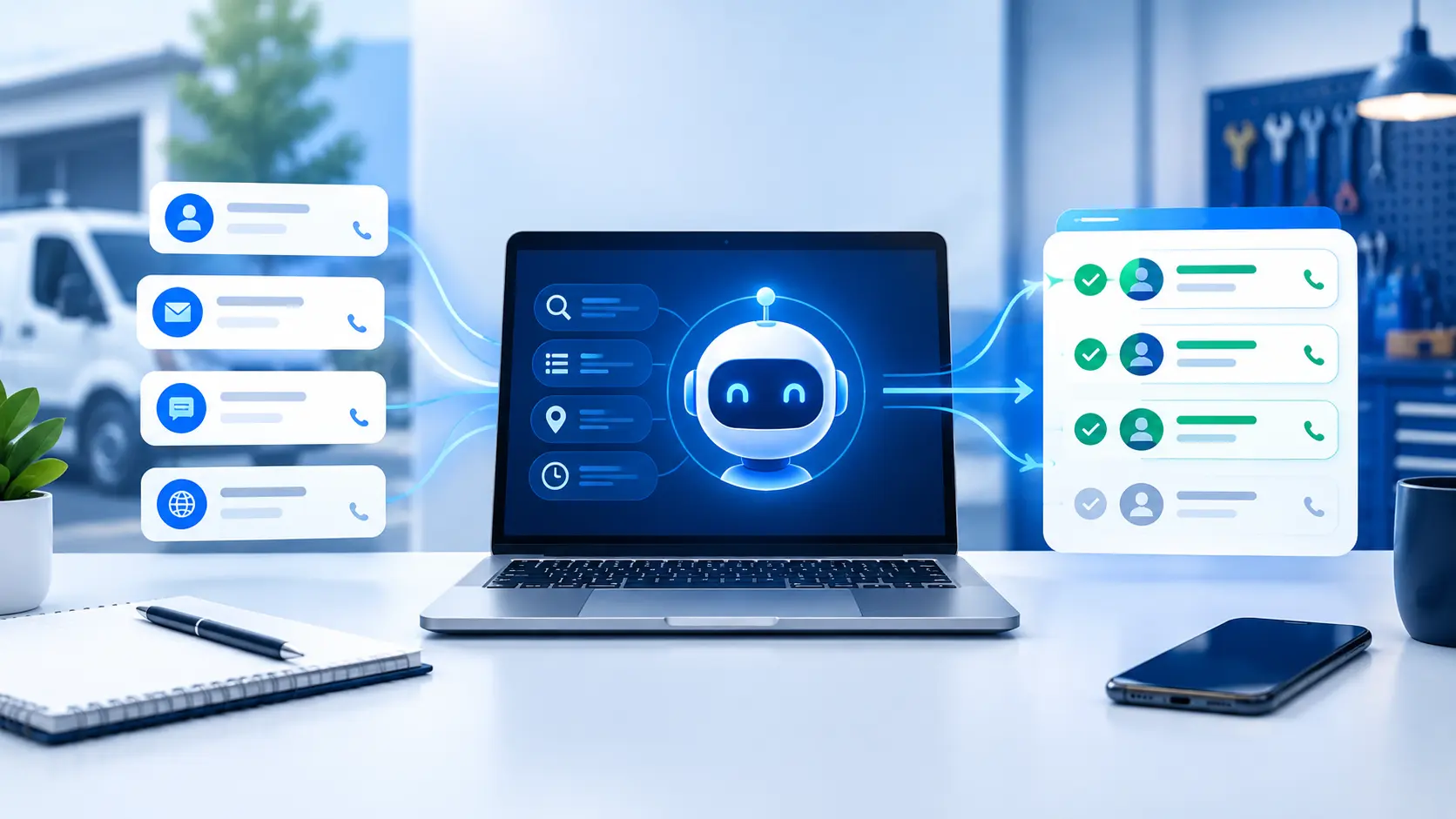
Learn how service businesses can use AI lead qualification to identify high-quality prospects, automate follow-ups, ask the right questions, and route leads to sales faster.
Consider a typical case. A potential client sends a message at 9:40 p.m. on a Tuesday. They need help this month, they have a budget in mind, and they're comparing three providers. By the time the team replies the next morning, two competitors have already answered, and one of them has booked the call.
The data shows how common this is, and why speed to lead matters. In a 2024 test, Revenue Hero submitted demo requests to 1,000 B2B SaaS businesses and found that 63.5% never responded at all, while those that did took more than a day on average. A benchmark from Optifai, a sales software vendor, tracked lead response time across 939 B2B businesses between 2025 and 2026 and found that leads contacted within five minutes closed at 32%, compared with 12% for leads contacted after 24 hours. Both studies focus on B2B sales teams rather than local service businesses, but the pattern holds: the longer a lead waits, the less likely it is to buy.
AI lead qualification closes that gap. It responds the moment a lead arrives, asks the right questions, separates serious buyers from casual browsers, and hands the team a short list of conversations worth having. This guide explains how it works, what to set up first, and how to measure whether it's paying off.
What AI Lead Qualification Actually Does
Lead qualification is the process of deciding which inquiries deserve a sales conversation and which ones need nurturing, redirecting, or a polite no. Traditionally, a person handles it by reading each message, replying, asking follow-up questions, and updating the CRM, the customer relationship management system that stores contacts, conversations, and deal history.
An AI qualification agent does the same job in real time. It reads the inquiry, understands what the person is asking for, and continues the conversation naturally. Along the way, it collects the details the sales team needs, such as service type, timeline, budget range, and location. Qualified leads move forward, and the rest receive a helpful response that fits where they are. The broader business case is covered in the guide on why service businesses invest in an AI lead conversion platform.
Where Manual Qualification Breaks Down
Manual qualification fails in five predictable places:
• After hours and weekends. Inquiries pile up when nobody is online, and response times stretch into the next business day.
• Social media inboxes. Instagram and Facebook messages are easy to miss and hard to track alongside email and web forms.
• Repetitive screening. Staff ask the same five questions dozens of times a week, which leaves less time for actual sales conversations.
• Inconsistent follow-up. When the team gets busy, follow-ups slip, and warm leads quietly go cold.
• Messy records. Details shared in chat never make it into the CRM, so the next person starts from scratch.
How an AI Qualification Flow Works
A well-designed setup follows five stages.
Stage 1: Instant Response
The agent replies within seconds on the channel the lead used, whether that's a website form, live chat, Instagram, Facebook, or WhatsApp.
Stage 2: Qualifying Questions
The agent asks a short set of questions based on the business's own criteria. A home renovation firm might ask about project type, property location, and preferred start date. A clinic might ask about the service needed and insurance coverage.
Stage 3: Scoring and Routing
Each answer feeds a lead scoring model, a set of rules that assigns points to every inquiry based on how closely it matches the business's ideal client. High-scoring leads go straight to booking. Lower-scoring leads receive useful information or a nurture sequence. Anything sensitive or unusual goes to a person.
Stage 4: Booking and Handoff
For qualified leads, the agent offers available time slots and books the call directly into the team's calendar. The handoff, the moment the conversation passes from the agent to a person, comes with a summary of everything the lead shared, so the call starts with context instead of repeated questions.
Stage 5: Follow-Up and Records
Every conversation is logged in the CRM automatically. Leads who don't book receive timed reminders through automated lead follow-up, and no one has to remember to send them.
Choosing the Right Qualification Criteria
The agent is only as useful as the questions it asks. Five categories cover most service businesses:
• Need: The exact service or problem the lead wants solved
• Timeline: When they want to start or make a decision
• Budget range: A rough figure, offered as a range so the question feels comfortable
• Location or service area: Essential for local and field service businesses
• Decision role: Whether the person can approve the purchase
Keeping the list to four or five questions keeps the conversation short and friendly.
A Real Example From the Field
Train Gym put an AI booking agent to work on its Instagram and Facebook inboxes. The agent reads each incoming message, works out what the person wants, and carries the conversation toward a booking without a staff member opening the thread first. Between May 1 and July 15, it handled 260 messages, qualified 69 leads, and booked 6 appointments.
In ratio terms, roughly 27% of conversations turned into qualified leads, and 8.7% of qualified leads went on to book an appointment. That second figure is measured from qualified leads rather than raw message volume, so it reflects screened interest instead of an inflated top-of-funnel number. The larger change was operational: before the agent, every message landed on a staff member's plate before it could even be sorted.
What to Set Up Before Launch
A smooth launch depends on five foundations.
Connect the CRM. Without a live connection, the agent can talk but can't record anything. Proper CRM integration makes sure every lead, answer, and booking lands in the right place.
Sync the calendar. The agent needs to see real availability, including buffers between meetings and time zones for remote clients.
Write the knowledge base. A knowledge base is the collection of approved information the agent draws its answers from: services, price ranges, service areas, policies, and common questions. Clear, current documents keep the agent's answers accurate.
Set handoff rules. Decide which situations always go to a person, such as complaints, large contracts, or anything involving sensitive information.
Protect the data. Lead conversations include phone numbers, addresses, and personal details. Hosting the system on secure cloud infrastructure with access controls and encryption keeps that information safe. Regulated businesses carry extra duties. A clinic that collects patient health details must handle them under HIPAA, which includes signing a business associate agreement with any vendor that processes that data. A law firm must protect client confidentiality from the very first message.
Metrics That Show Whether It's Working
Six numbers give a clear picture of results:
• First response time: How quickly the first reply goes out on each channel
• Qualification rate: The share of inquiries that meet the criteria
• Booking rate: The share of qualified leads that schedule a call
• Show rate: The share of booked calls that actually take place
• Handoff rate: The share of conversations that need a person
• Time saved: Hours the team no longer spends on inbox triage
Common Mistakes to Avoid
• Asking too many questions. Every extra question lowers completion rates.
• Hiding that it's AI. Being upfront builds trust, and most people care more about getting a fast, useful reply than about who sends it.
• Skipping the handoff path. People should always be able to reach a human when they need one.
How Enorness Builds AI Lead Qualification Systems
Enorness is an AI-native software and digital product partner based in Sheridan, Wyoming. Every qualification project starts by mapping how leads arrive today and diagnosing where response time, follow-up, or record-keeping breaks down.
The team then builds the agent around the business's real criteria, channels, and systems, verifies its answers against actual past inquiries, and refines it after launch using live conversation data. For any service business ready to stop losing leads to slow replies, the next step is simple: Book a strategy call.
Frequently Asked Questions
Q1: What is AI lead qualification?
A: AI lead qualification uses an AI agent to respond to new inquiries, ask screening questions, score each lead against set criteria, and route qualified prospects to booking or a sales rep.
Q2: Which channels can an AI qualification agent cover?
A: Common channels include website forms, live chat, Instagram, Facebook, WhatsApp, and email. The best starting point is the channel that receives the most inquiries.
Q3: Does AI lead qualification replace the sales team?
A: No. The agent handles first responses, screening, and scheduling. The sales team still runs the conversations that close deals and handles anything complex or sensitive.
Q4: How many qualifying questions should the agent ask?
A: Four or five well-chosen questions work best. They should cover need, timeline, budget range, location, and decision role without feeling like a long form.
Q5: Can AI lead qualification connect to an existing CRM?
A: Yes. With the right integration, the agent creates and updates CRM records automatically, including conversation summaries, answers, and booked appointments.
Q6: Is lead data safe with an AI qualification agent?
A: Yes, with the right setup. Secure hosting, encryption, access controls, and clear rules about what data the agent collects protect personal information. Clinics and law firms also need to meet HIPAA or client confidentiality requirements.
Final Thoughts
What holds most service businesses back is not interest but the time it takes to respond, screen, and follow up. AI lead qualification handles those steps the moment an inquiry arrives, keeps every record clean, and gives the sales team more time for the conversations that matter. Starting with one busy channel and a short list of questions is the most reliable way to see the impact.

Written by
Mark Louis



Let's Build Something Extraordinary
Turn ideas into intelligent products that drive real business results.