
AI has taken the world by storm and Mobile App Development is one of them. The features that AI brings to the mobile app development trends sector is not less than a science fiction movie. The story that we use to listen few decades ago, are now reality.
According to Market Research Future, the mobile app development market is projected to grow to $988.50 billion by 2035, expanding at a Compound Annual Growth Rate (CAGR) of 22.9% throughout the 2024–2035 forecast period.
Mobile app development has adopted a ton of AI features and made the mobile phone user experience even better. AI allows the tracking of customer behavior and provides them personalized recommendation and suggestions within the app to provide them the best possible experience. Now, the question that comes to mind is what are the next AI features or trends that we can are expected to see in Custom App Development.
What does AI mean in Mobile Application Development?
AI in app development can have different implementation for user and developer. Overall, automation is the core of AI integration in mobile application development.
User
When it comes to users, smart devices and mobile phones have evolved far beyond basic functionality. Today, they are becoming increasingly intelligent with voice-controlled mobile apps that allow users to perform tasks hands-free, faster, and more intuitively.
From searching information, sending messages, and setting reminders to controlling smart home devices and managing daily schedules, voice-enabled apps are transforming how users interact with technology. This shift not only enhances convenience and accessibility but also improves user experience, especially for multitasking users and individuals with accessibility needs. As voice recognition and AI continue to advance, voice-controlled mobile apps are becoming a key expectation rather than a premium feature in modern digital experiences.
Developers
When it comes to developers, it is all about vibe coding and coding assistance tools like lovable and cursor. So, automation allows the developers to implement advance AI features in low end devices as well.
- Automates routine coding processes, easing the burden on developers and accelerating app release timelines.
- Enables advanced chatbot creation and voice recognition, allowing real-time, natural, and conversational user interactions.
- Leverages machine learning frameworks such as TensorFlow and PyTorch to build smarter, self-improving applications.
- Powers predictive analytics that anticipate user intent and need even before a search is made.
- Delivers highly personalized app experiences by analyzing user behavior and contextual data in real time.
- Enhances AI adoption across mobile platforms through secure, on-device intelligence capabilities.
- Facilitates no-code and low-code development, empowering non-technical users to create intelligent applications.
- Improves app quality by strengthening testing processes and enabling early detection of bugs and vulnerabilities.
How mobile apps increase business revenue

Mobile apps play a vital role in driving profitability and long-term success, clearly showing how mobile apps increase business revenue across industries. One of the key benefits of mobile app development for business is the ability to build a direct, always-available connection with customers. Unlike websites, apps remain on users’ devices, improving brand visibility and encouraging repeat engagement. Through push notifications, businesses can promote offers, new products, and limited-time deals, helping increase sales with mobile apps by reaching users instantly.
A well-designed mobile app for business growth also delivers personalized experiences by analyzing user behavior, preferences, and purchase history. This personalization improves customer satisfaction, boosts retention, and increases average order value. Additionally, mobile apps simplify the buying process with features like one-tap checkout, saved payment details, and integrated digital wallets, reducing friction and improving conversion rates.
Beyond sales, mobile apps provide powerful analytics that show how mobile apps help businesses grow by identifying customer trends, optimizing marketing strategies, and refining user journeys in real time. With multiple monetization options, such as subscriptions, in-app purchases, loyalty programs, and targeted ads. Mobile apps become a scalable revenue channel that supports sustainable business expansion.
Top AI Trends in Mobile App Development
Following are the top 5 trends in mobile app development that we can expect in 2026.
On-Device Machine Learning
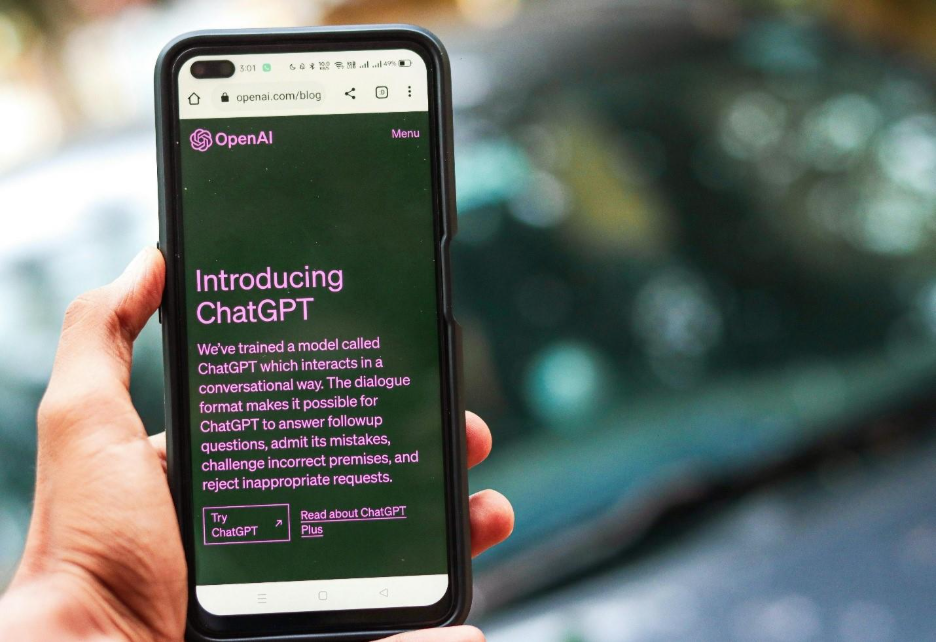
One significant development worth highlighting is the adoption of on-device machine learning models. These models allow apps to operate directly on users’ devices, minimizing reliance on cloud-based servers. As a result, applications benefit from stronger data privacy, reduced latency, and improved performance, factors that play a key role in increasing user retention.
Additionally, modern predictive analytics can now detect even subtle user behaviors and dynamically adapt the app interface in real time. Developers are rapidly adopting these innovations to deliver more intuitive and responsive user experiences.
According to the “State of AI” 2025 survey, nearly 88% of organizations are using AI across at least one business function. This often leads to the question: Will AI replace app developers? The answer is a clear no. Instead of replacing them, AI enhances developer productivity, accelerates workflows, and enables smarter task execution, while human expertise and decision-making remain essential.
Edge Computing Infrastructure
The system architecture is steadily shifting from centralized cloud servers to edge-based computing nodes. As a result, mobile app development companies are deploying compact processing units closer to where data is generated, such as smartphones and local devices.
This approach places AI capabilities nearer to the end user rather than on distant servers. The reason is simple: it delivers faster response times and lowers reliance on continuous internet connectivity. For instance, edge AI running on a Jetson Nano can process video in approximately 22 milliseconds, whereas sending the same data to the cloud may take around 150 milliseconds.
However, this model does come with initial considerations. It may require specialized hardware and ongoing local maintenance. That said, edge computing enables better management of data transfer trade-offs. Transmitting raw data to the cloud increases bandwidth usage and operational costs, while local inference significantly reduces both. To measure effectiveness, teams typically focus on two key KPIs: inference latency, which reflects decision-making speed, and server egress, which helps monitor and control data transfer costs.
Note: AI edge implementation processes data locally on the device, resulting in faster app performance and enhanced user privacy. Since it does not rely heavily on a constant or high-speed internet connection, apps can function reliably even in remote locations or low-bandwidth environments.
5G Integration

5G technology has transformed the mobile experience, turning ideas that once seemed impractical into reality. 5G integration is a big milestone in the domain of mobile app development as it allows some highly useful features like ultra-high bandwidth and extremely low latency. 5G allows developers to build and run advanced features, previously dependent on powerful cloud infrastructure, directly on mobile devices.
For example:
- Cloud gaming: Powered by 5G, mobile devices can stream games with console-level graphics, delivering under 20 ms latency and virtually no lag for a smooth, immersive experience.
- Live AR commerce: When combined with 5G and edge computing, apps can overlay virtual products onto a phone’s camera view in real time. Users can virtually try on clothing or visualize furniture in their own space, all through their mobile screens.
Super Apps & Composable App Architecture
Super apps integrate various services into a single platform. Built with micro-frontends and plug-ins, developers can easily add or update the features separately.
For example, WeChat and Alipay have integrated multiple services seamlessly into a single platform. This unified model keeps users engaged because they can do many things without leaving the app.
There is also a data privacy risk for mobile data integration. Studies show that it’s possible to predict sensitive personal info with over 95% accuracy based on mini-app usage. To manage privacy, developers define clear data governance for each mini-app and prevent sensitive data leakage.
Instant Apps and Progressive Web Applications
Instant app usage and micro experiences allow users to access specific features of an app without installing the full version. This significantly reduces user friction and lowers the barrier to entry, making it easier for users to explore and engage with an app quickly.
For instance, Google Play Instant enables Android users to try an app through the “Try Now” option before downloading it. Similarly, Progressive Web Apps (PWAs) function directly within the browser while delivering an app-like experience. PWAs offer fast loading times, offline capabilities, and improved performance, helping businesses enhance user engagement without requiring a traditional app installation.
Frequently Ask Questions – FAQ’s
Why are mobile apps essential for digital transformation in businesses?
Mobile apps play a crucial role in digital transformation by enabling real-time customer interactions, data-driven personalization, and seamless omnichannel experiences. With AI, cloud computing, and edge AI integration, mobile apps help businesses modernize operations, improve efficiency, and unlock new revenue streams.
How do mobile apps improve customer engagement and retention?
Mobile apps improve customer engagement through personalized content, push notifications, loyalty programs, and in-app messaging. By leveraging user behavior analytics, AI-powered recommendations, and contextual experiences, businesses can retain customers longer and increase lifetime value.
How does AI help businesses grow through mobile apps?
AI helps businesses grow by enabling predictive analytics, hyper-personalization, chatbots, and voice-enabled interactions within mobile apps. Technologies like machine learning, edge AI, and on-device intelligence allow apps to anticipate user needs, improve engagement, and increase sales with mobile apps.
How do 5G and edge computing improve mobile app performance?
5G and edge computing significantly enhance mobile app performance by reducing latency, increasing speed, and processing data closer to users. This allows advanced features such as cloud gaming, live AR commerce, and real-time personalization, making mobile apps more responsive and reliable.
Will AI replace mobile app developers in the future?
No, AI will not replace mobile app developers. Instead, AI enhances developer productivity by automating repetitive tasks and improving testing and analytics. Human creativity, strategic thinking, and user-centric design remain essential, especially as mobile app development trends move toward AI-driven and data-powered ecosystems.
Build Faster, Grow Smarter – Start With Enorness!
Let’s shape the future of your business. Connect with Enorness today for smart, scalable digital solutions!
Discuss Your ProjectConclusion
In 2026, mobile app innovation will be shaped by AI-driven personalization, ultra-fast 5G connectivity, cross-platform development frameworks, stronger data privacy measures, and advanced monetization strategies. To keep up with advancing mobile app development trends, businesses and developers will need to strike the right balance between AI-powered automation and human creativity.
This combination is essential for delivering truly engaging and immersive user experiences. Looking ahead, the focus will shift toward edge AI, spatial computing, and highly personalized digital ecosystems. To remain competitive in this growing tech domain, organizations should begin aligning their development approaches with AI technologies and data-led personalization today.